A Calm Way to Help Anxious Kids Practice Daily
When a child melts down over one worksheet, the problem is often not laziness but overload. A calmer daily rhythm can help Surrey and Delta families lower the pressure without lowering expectations.
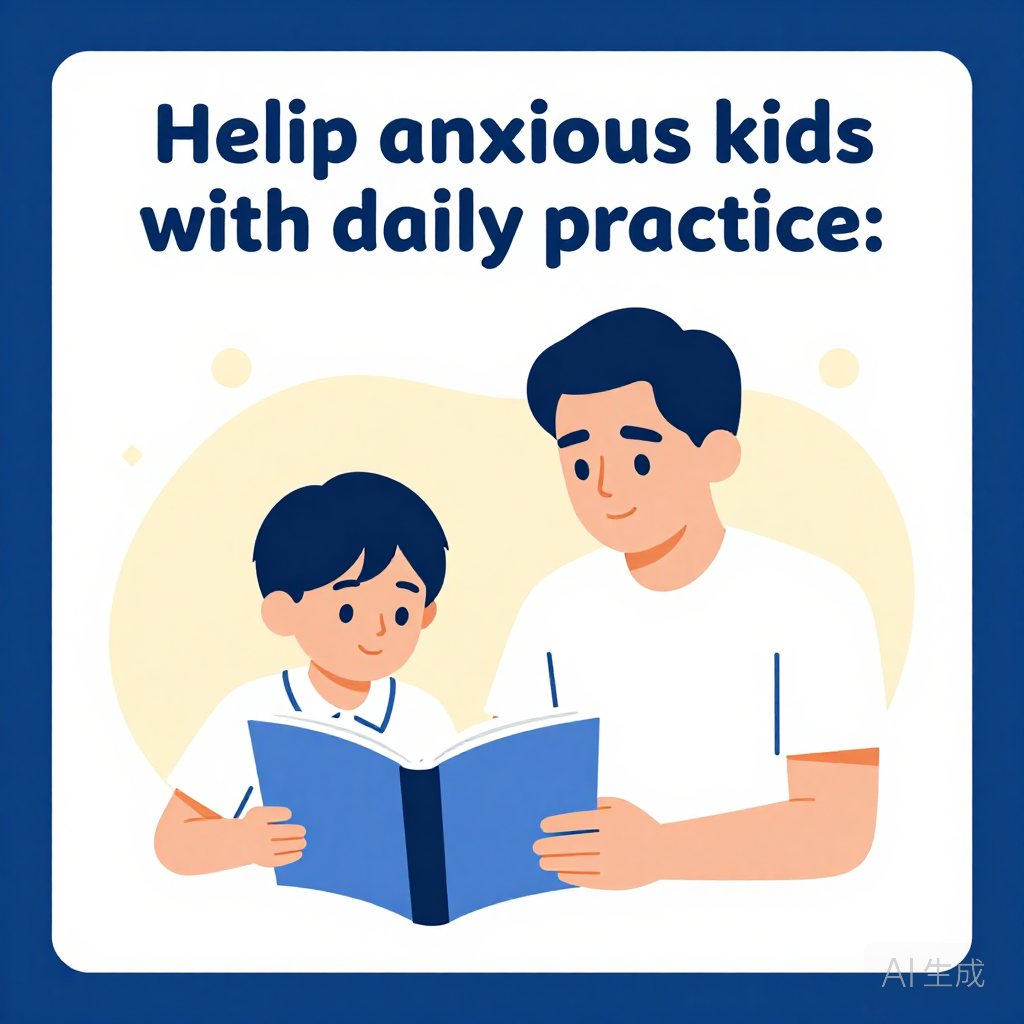
The five-minute storm
On a damp October evening, the parking lot near Scottsdale Centre is full in that familiar way: grocery bags in one hand, dance bag or soccer cleats in the other, younger sibling half-asleep in the back seat, and everyone trying to get home before dinner gets too late. The Halloween costumes have already become a topic at school. Diwali plans are starting to build in group chats. The first reporting period is close enough that parents are checking backpacks a little more carefully than they did in September.
Jin, a composite Grade 3 student, sits at the kitchen table with his worksheet in front of him and his water bottle untouched. Ten minutes earlier, he had been talking happily about recess. Now his shoulders are up near his ears. His pencil hovers. His mother is warming daal on the stove, answering a text from an auntie about the weekend, and trying not to sound worried when she says, “Just start with the first one.”
He presses too hard on the page, gets one item wrong, and the whole thing tips. “I can’t do it.”
His mother goes quiet for a second because what she is really thinking is, Why does something this small become so big every night? If he gets this upset now, what will happen later?
Parents often describe this moment as if it came out of nowhere. But when you sit across from enough children, you learn that it usually does not come out of nowhere at all. It is the last drop in a very full cup.
Why October brings the feelings to the surface
September can be carried by novelty. New teacher, new desk, new routine, fresh pencils, everyone trying hard. By October, the shine is gone. Children are tired in a more honest way. Expectations feel real. For some families in Surrey and Delta, home is running in two languages all evening long: English from school, Punjabi or Mandarin or Tagalog from grandparents, parents switching between both while also getting dinner ready and asking about the day. That language-rich environment can be beautiful, but it can also make school tasks feel heavier for a child who is already mentally spent.
Sometimes a parent will say, “But it’s only one page.” That is true from the adult side. From the child side, it may not feel like one page. It may feel like proof. Proof that they are slow. Proof that they are behind their classmates. Proof that if they make a mistake, someone will be disappointed.
And anxious children are often the ones who care the most. They are not refusing because they do not value padhai — study. They are refusing because the emotions arrive before the thinking does.
I see this especially with children who are otherwise very capable. The child who can remember every detail of hockey practice. The one who gets ready independently in the morning. The one teachers describe as thoughtful or quiet. Anxiety does not always look dramatic. Often it looks like pencil-tapping, bathroom trips, bargaining, stomach aches, tears over one correction, or a sudden need to sharpen a perfectly sharp pencil.
That is why a calm framework matters. Not a motivational speech. Not a lecture about effort. A framework. Something steady enough that the child does not have to spend fresh energy figuring out what tonight will feel like.
We have written more articles for Surrey parents about building independent learning habits, but with anxious children, the starting point is usually not skill alone. It is nervous-system management.
A calmer framework looks boring on purpose
Parents sometimes expect the solution to be a clever trick. Usually it is much plainer than that. The children who settle best into daily practice often have evenings that become deliberately predictable. Not perfect. Predictable.
With a child like Jin, I would not begin by talking about confidence. I would begin by lowering uncertainty. The framework can be simple:
- same rough time each day
- same spot
- same order: sit, begin, finish, put away
- same parent response to wobbling
That last one matters most. Many anxious children are scanning the adult more than the worksheet. If the adult sounds tense, hurried, disappointed, or overly eager, the child hears danger. When the adult stays plain and calm, the work stops feeling like an emotional event.
Plain language helps. Instead of “You know this” or “Why are you crying?” try “Start with this line.” Instead of “Finish the whole thing right now,” try “Do the next part.” Instead of giving three reminders in rising volume, give one instruction and then leave a little space.
This is harder than it sounds, especially for caring parents. In many local families, education is not casual. It is tied to sacrifice, opportunity, migration, and hope. Parents are not wrong to take learning seriously. But children can feel that seriousness as pressure long before they can use it as motivation.
A father once described this to me perfectly using sports. His son never cried at basketball drills, even when they were repetitive. Why? Because drills were expected. Nobody discussed his feelings every thirty seconds. They just showed up, did the footwork, and moved on. That same child fell apart over a worksheet because home practice had become loaded with commentary.
There is something useful in that comparison. In sport, repetition is normal. The child does not assume every layup defines them forever. At home, anxious kids often read much more meaning into one page than we realize. A calmer framework takes away some of that extra meaning.
What parents can stop doing first
When a child is upset, adults naturally move toward one of two extremes. Either they rescue too quickly — “It’s okay, leave it, we’ll do it later” — or they push harder — “Sit down and finish.” Both reactions are understandable. Neither teaches steadiness.
What tends to help more is a middle path: stay nearby, keep the tone neutral, and make the task feel smaller without making it optional in the moment. An anxious child often needs less discussion and more containment.
That can sound like this:
“You don’t have to like it. Just do these two.”
“Your job is to begin.”
“We are not doing the whole evening right now. We are doing this line.”
It also helps to avoid turning every session into a review of school performance. October is the season when a lot of parents are reading teacher comments closely and filling in the blanks with their own fears. A child hears, “How was your day? Did you finish your work? Did you make mistakes? Are you behind?” and by evening they are already braced for another evaluation.
If daily practice is going to become calm, it cannot feel like one more place where the child is being measured. It has to become a routine where the child knows what to do, does it, and comes out the other side intact.
Back at the kitchen table
So let’s go back to Jin.
The first change his mother makes is not academic. She stops starting the worksheet at random moments. Before, some days it happened right after school, some days after dinner, some days after a younger sibling’s bath. On busier evenings, especially when there was martial arts practice or a temple visit or relatives dropping by before Diwali, the worksheet carried the stress of everything delayed ahead of it.
Now the routine is narrower. Snack. Ten quiet minutes. Worksheet at the same corner of the table. No TV in the background. No opening discussion about school marks. His mother sits nearby for the first minute, then stands up and goes back to folding laundry, staying available but not hovering.
The second change is in her face and voice. This part is not easy. Parents often think children need more encouragement, but anxious children sometimes hear encouragement as alarm: This must be hard if Mom is trying this much. So she makes her tone simpler. “Begin here.” “Fix this one.” “You’re still working.” That is all.
The third change is that she stops asking him to explain his feelings in the middle of the upset. Later, when everyone is calm, maybe. But not in the moment. In the moment, too much talking can make the child sink deeper into the emotion.
None of this is magic. He still has evenings where he resists. There are still days when a small correction stings more than it should. But the storms become shorter because the routine is not feeding them.
This is the part parents sometimes miss: anxious children do not usually need us to make every hard thing easy. They need us to make hard things feel containable.
Why independence grows from calm, not pressure
Parents often tell me they want their child to become more independent. That is a good goal. But independence is not built by stepping back all at once or by demanding toughness on command. It grows when a child experiences the sequence of beginning, persisting, finishing, and recovering from mistakes many times without drama.
That is one reason daily practice can be so powerful when it is handled calmly. The child learns, often very quietly, that not every wobble is an emergency. One wrong answer does not end the session. One tense evening does not define the child. The page gets done, the pencil gets put away, life goes on.
For multilingual households, there is another gentle benefit. A parent does not need perfect English explanations or long academic speeches to support this kind of practice. Calm structure translates across languages. A child understands consistency in any language.
And for sporty kids, the transfer is real. The same child who repeats a badminton serve or a soccer touch a hundred times can learn that mental repetition works the same way. Not exciting every day. Not dramatic. Just steady.
If your home has fallen into a nightly pattern of tears, bargaining, and frustration, it may help to have another set of eyes on the routine. At Kumon Strawberry Hill, we spend a lot of time helping families think about pacing, consistency, and how to make daily practice feel manageable for the child in front of them. If that would be helpful, you are welcome to book a free assessment or visit the centre and talk things through.
The small shift parents are usually looking for
A week later, Jin is still very much himself. He is not suddenly cheerful about every worksheet. He still sighs. He still asks how many questions are left. But one evening, after a long day and a costume discussion and too much excitement at school, he sits down, does the first few items without tearing up, and corrects one mistake with only a small frown.
His mother notices the change right away, but this time she does not rush in with praise. She just says, “Put it in your folder when you’re done.”
It is a small moment. From the outside, almost nothing. But for a family that has been living with a five-minute storm every night, it feels like air returning to the room.
That is often how progress begins in October in Surrey and Delta. Not with a dramatic breakthrough. Just a calmer table. One good worksheet. One parent letting go a little of the fear in their voice. One child learning that the page is only a page.
Frequently Asked Questions
Is daily practice too much for an anxious Grade 2 or Grade 3 child?
Not necessarily. For many children, the problem is less about daily practice itself and more about how charged it feels. Short, predictable sessions are usually easier than long, irregular ones. The goal is a manageable routine that lowers uncertainty, not a long evening of correction.
How long should a daily worksheet session take at home?
For most children, shorter is better when building consistency. A brief session that actually happens every day is usually more useful than a long session full of stalling and tears. What matters most is having a clear start, a calm tone, and a regular place in the evening routine.
What if my child speaks another language at home and gets anxious in English tasks?
That is common in many Surrey and Delta homes. Keep instructions simple and consistent. You do not need a long explanation in perfect school English to support your child. Calm structure, brief directions, and regular daily practice often help more than extra talking during an upset moment.
Should I sit beside my child the whole time during practice?
Usually, no. Many anxious children do better when a parent helps them begin and then stays nearby without hovering. Too much watching can raise the pressure. The sweet spot is often present but not intense: available for support, but not turning the worksheet into a performance.
What should I say when my child starts crying over one mistake?
Use fewer words than you think. Try a neutral response such as, “Fix this one,” or, “Do the next part.” Avoid big speeches, comparisons, or visible panic. In the moment, your steadiness matters more than your explanation. Save longer conversations for later, when your child is calm again.