When Should Your Child Start Kumon? An Honest Age-by-Age Guide
Parents often wonder whether their child is the right age for Kumon — too young, too old, or just right. Here's an honest age-by-age breakdown.
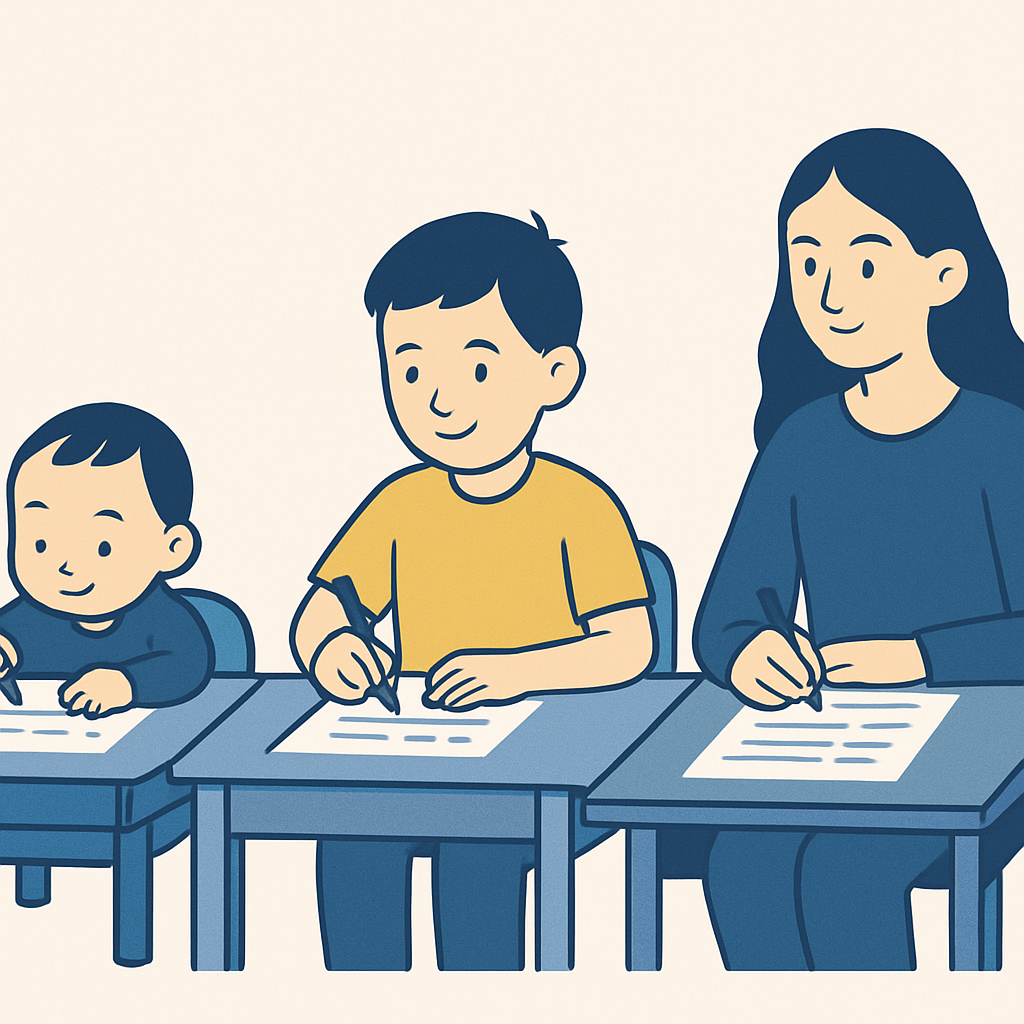
One of the most common questions we hear at Kumon Strawberry Hill is: "Is my child too young? Too old? The right age?" The honest answer is that Kumon works at a wide range of ages — but it works differently at different stages.
Age 3–5: Early Learners
Kumon has a programme specifically designed for children aged 3 and up. At this stage, the focus is on basic number recognition, pencil control, letter identification, and the habit of focused, independent work.
Who it's for: Parents who want to give their child a confident start before kindergarten, or who want to begin building the self-learning habit early.
What to expect: Short, calm sessions. The content is simple — the goal is building routine and focus, not academic acceleration. Sessions at this age are often 15–20 minutes.
Ages 6–9: Elementary Years
This is the most common time to start Kumon. Children at this age have enough focus for the programme and are at a stage where foundational gaps can be addressed before they compound.
Who it's for: Children who need to fill a gap in math or reading, children performing at grade level who could benefit from stronger foundations, or children ready to advance.
What to expect: The programme starts at or slightly below the child's current level. Progress is steady and measurable. Many children who start at this age reach above grade level within 12–18 months.
Ages 10–13: Middle School Years
Starting Kumon in middle school is absolutely worthwhile, but requires more motivation from the student. Older children benefit most when they understand why they're doing it and have some buy-in.
Who it's for: Students who have a significant math gap heading into secondary school, students who want to build confidence for Grade 9 and 10 math, or high achievers who want to advance well beyond grade level.
What to expect: Progress may initially feel slow as foundational gaps are closed, but results become more visible as the student reaches their school level and beyond.
Ages 14+: High School
Older students can benefit significantly from Kumon, particularly for math. The structured, systematic approach to algebra, functions, and calculus concepts complements what's being taught in BC high school courses.
Who it's for: Students struggling with Grades 10–12 math, students preparing for post-secondary entrance, or motivated students wanting to advance in math.
The Right Time Is Now
Whatever your child's age, the best time to start is when you identify a need — not after waiting to see if it resolves on its own. Book a free assessment at Kumon Strawberry Hill and we'll show you exactly where your child is and what's possible.